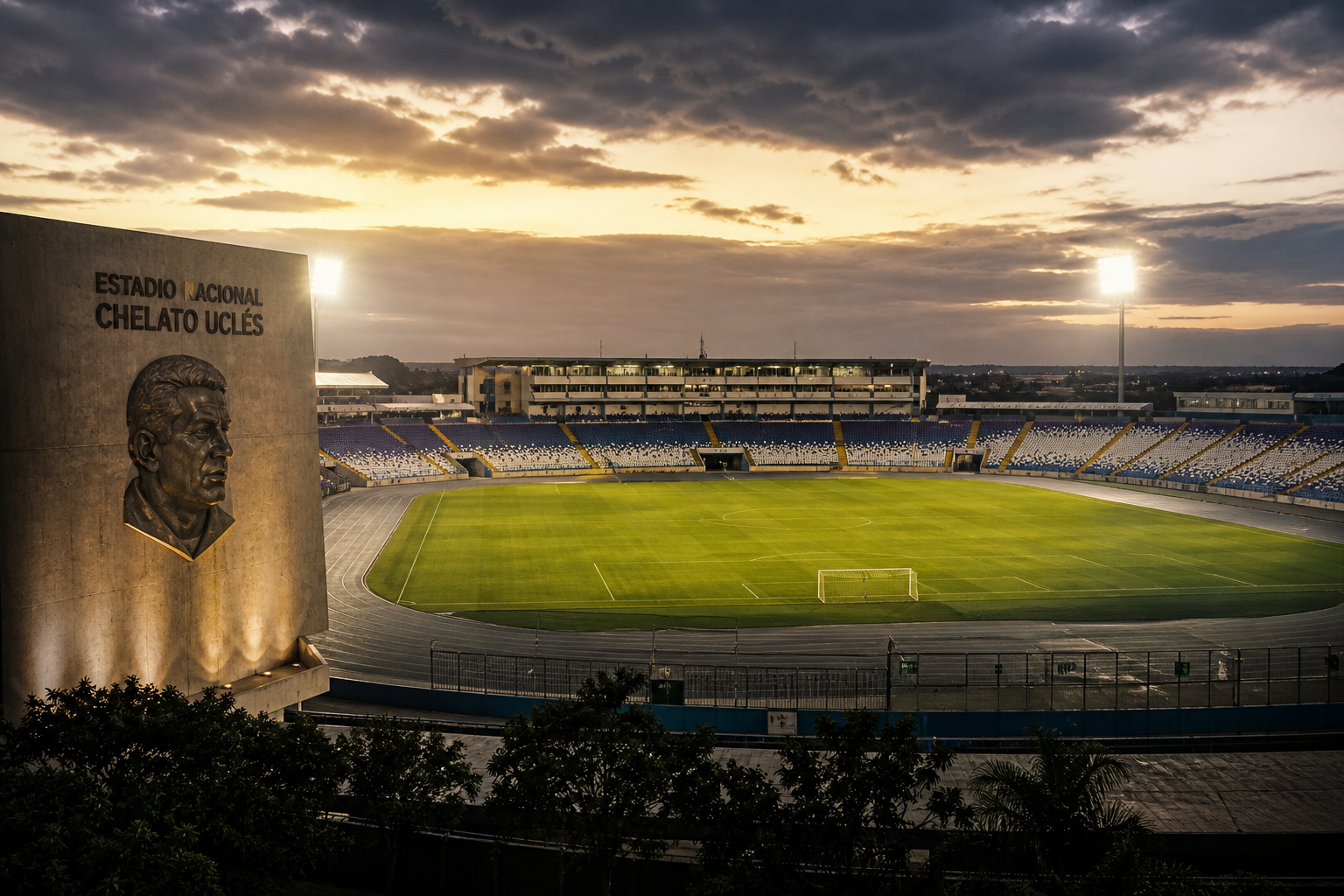
Estadio Nacional Chelato Uclés – The Home of CD Olimpia Honduras
In Tegucigalpa, the capital of Honduras, there is a stadium that occupies a place in the country’s sporting culture far beyond what its physical dimensions alone could explain. The Estadio Nacional Chelato Uclés is not simply the home ground of Club Deportivo Olimpia – it is the stage upon which the most important chapters of Honduran football have been written, the venue where the country’s most celebrated clubs have competed for national honours and where the Honduras national team has played some of its most significant international fixtures. To understand the Estadio Nacional is to understand something essential about football in Honduras and about the place that CD Olimpia occupies within it.
The stadium sits in the heart of Tegucigalpa, a city of contrasts built across a landscape of hills and valleys that gives the Honduran capital its distinctive character. The ground’s location in the capital has made it the natural focal point for domestic football of the highest level – the place where the Liga Nacional’s most important matches are decided, where championship finals are contested and where the great clásicos of Honduran football generate the kind of atmosphere that supporters travel from across the country to experience.
The Name – A Tribute to a Football Legend
The stadium’s current name – Estadio Nacional Chelato Uclés – honours one of the most respected figures in the history of Honduran football: José de la Paz Uclés, universally known by his nickname “Chelato.” A former player and later a highly regarded coach, Chelato Uclés made his most lasting mark as the manager of the Honduras national team, leading the country through qualification campaigns and international competitions with a tactical intelligence and motivational quality that earned him enormous respect across Central American football.
The decision to name the national stadium after Chelato Uclés reflects the depth of his contribution to Honduran football and the esteem in which he is held across the country. For supporters of CD Olimpia, the naming carries additional resonance – Uclés’s connection to Honduran football culture is inseparable from the competitive environment in which the club has achieved its greatest successes, and the stadium that bears his name has been the scene of some of the most memorable moments in the club’s history.
Capacity and Infrastructure
With a stated capacity of 35,000 spectators, the Estadio Nacional Chelato Uclés is one of the largest football venues in Central America. The ground’s infrastructure has been updated and improved at various points over its history, with renovations designed to enhance the experience for supporters while maintaining the characteristics that make the venue distinctive within the regional context.
The distribution of the stadium – with covered sections offering protected seating alongside open standing areas – creates a visual and acoustic environment that contributes directly to the atmosphere generated during major matches. The covering of key sections of the ground amplifies the noise produced by a large crowd, creating an intensity of sound that visiting teams have consistently cited as a significant challenge. For CD Olimpia, whose home support is among the most vocal and passionate in Honduran football, this acoustic environment represents a genuine competitive advantage in the most important fixtures of the Liga Nacional calendar.
The playing surface at the Estadio Nacional has historically been maintained to a standard appropriate for top-level domestic competition and international fixtures, though the demands of a dual-use venue – serving both CD Olimpia and the Honduras national team – present ongoing challenges in terms of pitch maintenance and scheduling. The stadium’s management team works to balance the competing needs of club and international football while keeping the surface in conditions that reflect the quality of competition played upon it.
The History of the Ground
The Estadio Nacional has a history that tracks closely with the development of professional football in Honduras. Its establishment as the country’s primary football venue coincided with the growth of the Liga Nacional as a professional competition in the 1960s, and the ground has since hosted countless matches that have shaped the narrative of Honduran football across six decades of professional competition.
For CD Olimpia, the relationship with the Estadio Nacional is one of the defining features of the club’s identity. The ground has been the scene of 39 Liga Nacional title celebrations – each one a moment when the white and black colours of Olimpia filled the stands and the city of Tegucigalpa marked the achievement of its most successful club. It has also been the venue for CONCACAF competition matches that placed Honduran football on the continental map, with Olimpia using the ground’s capacity and atmosphere to create the kind of home advantage that has contributed to memorable results against regional and international opposition.
The history of the Estadio Nacional is also, inevitably, a history of the great rivalries of Honduran football. The clásico between CD Olimpia and CD Motagua – both Tegucigalpa clubs, both with large and passionate fanbases – has been played at the Estadio Nacional more times than any other fixture in the Liga Nacional’s history, and the atmosphere generated on those occasions has made the ground a byword for intense football experience in Central America. Real España, the great club from San Pedro Sula, has also been a regular opponent in the stadium’s most significant matches, and the encounters between these three clubs at the Estadio Nacional have produced some of the most memorable nights in Honduran football.
The Atmosphere – What Makes Estadio Nacional Special
The atmosphere at the Estadio Nacional Chelato Uclés on a major match night is an experience that supporters who have been present describe with a consistency that reflects genuine shared feeling. When CD Olimpia take to the field for a Liga Nacional Clausura fixture against direct title rivals, or when the club hosts a CONCACAF competition match against regional opposition, the combination of crowd size, acoustic environment and collective emotional investment creates something that transcends the sum of its parts.
The white and black of Olimpia fill the majority of the ground’s sections when the club plays at home, creating a visual statement of the club’s dominance within the Tegucigalpa sporting landscape. The noise generated by a capacity or near-capacity crowd at the Estadio Nacional has been cited by visiting players and coaches as one of the most challenging environments in Central American football, and several Olimpia results in key fixtures across their history can be attributed at least in part to the advantage created by the home support.
For supporters who travel to the ground from other parts of Honduras, or who make the journey from abroad to watch Olimpia play, the Estadio Nacional represents more than a match venue – it is a place of pilgrimage, the physical location where the history they have read about and the stories they have heard from older generations were actually made. That quality – the weight of accumulated history contained within the walls of the stadium – is what distinguishes the Estadio Nacional Chelato Uclés from simply being a large sports venue and elevates it to the status of a genuinely significant cultural site.
The Stadium in the 2025-26 Season
In the current 2025-26 season, the Estadio Nacional Chelato Uclés continues to serve as the stage for CD Olimpia’s Liga Nacional Clausura campaign under head coach Eduardo Espinel. The club’s home fixtures during this campaign have maintained the tradition of drawing large crowds eager to see Los Leones compete for their 40th league title, with the atmosphere at the ground reflecting the elevated expectations that come with supporting Honduras’ most decorated club.
The Clausura 2025 title – Olimpia’s 39th Liga Nacional championship – was celebrated at the Estadio Nacional in the manner that supporters of the club have come to associate with major achievements: with joy, noise and a collective sense of pride in what the institution has built over more than a century of competition. That celebration is now part of the stadium’s accumulated history, another chapter in the story that the Estadio Nacional Chelato Uclés has been telling through Honduran football since professional competition began.

FAQ
The Estadio Nacional Chelato Uclés has a capacity of 35,000 spectators, making it one of the largest football stadiums in Central America. It serves as both the home ground of CD Olimpia and a venue for Honduras national team international fixtures.
The stadium is named after José de la Paz “Chelato” Uclés, one of the most respected figures in Honduran football history. Uclés was a former player and highly regarded coach who achieved particular distinction as the manager of the Honduras national team.
CD Olimpia have celebrated all 39 of their Liga Nacional titles with the Estadio Nacional as their home ground, with the most recent championship – the Clausura 2025 – being the latest of those celebrations at the venue.