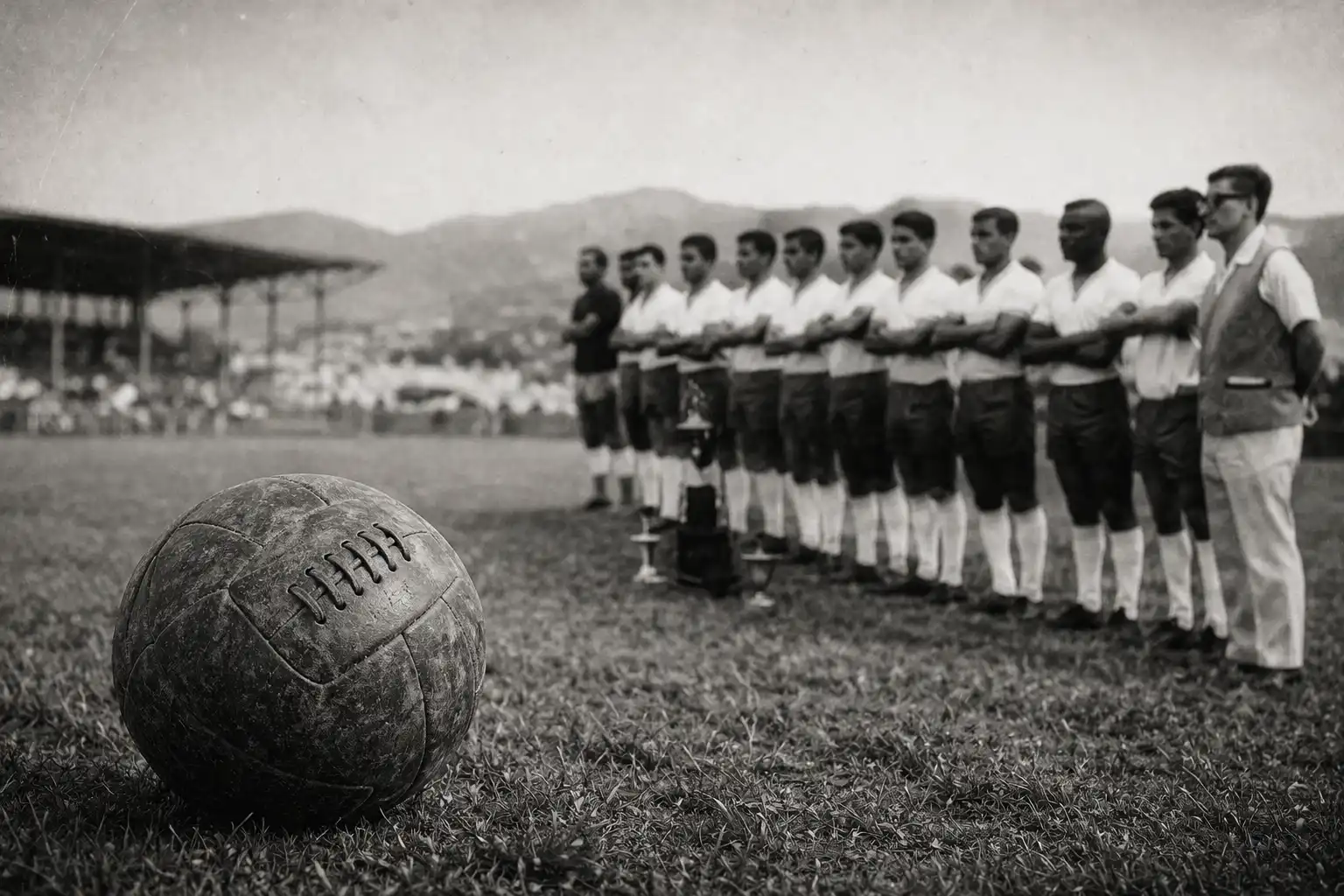
The Founding Story of Honduras Football
On June 12, 1912, a group of young men gathered in Tegucigalpa with a shared passion for sport and a determination to build something lasting. What they created that day was Club Deportivo Olimpia – a name that would go on to define Honduran football for more than a century and stand as the most decorated sporting institution in the history of the country. The story of how a baseball club founded in the capital of one of Central America’s smaller nations became a continental football powerhouse is one of the most compelling narratives in the region’s sporting history.
The founding group was led by Héctor Pineda Ugarte, who gathered alongside Carlos Bram, Arturo Bram, Enrique Buk, Santiago Buk, Miguel Sánchez, Samuel Inestrosa Gómez and Ramón Escobar to establish what they named Club Olimpia. The choice of name was deliberate – a reference to the ancient Olympic ideal of athletic excellence and competitive spirit that the founders hoped would define the character of their institution. It was a name that, over the course of the following century, would prove entirely appropriate.
It is important to note that in 1912, the game these founders were most interested in was not football at all. Honduras in the early twentieth century was a country where baseball held a prominent place in the sporting culture, and Olimpia was established primarily as a baseball club. Football, while gaining ground across Latin America during this period, had not yet established the dominant position in Honduras that it would come to occupy in the decades that followed. That transition would come in 1917, when Olimpia formally incorporated football as a discipline – a decision that, in retrospect, would prove to be the most consequential in the club’s entire history.
The context in which Olimpia was founded helps explain the particular character of the institution. Tegucigalpa in 1912 was a city in the midst of gradual modernisation, a capital navigating the complex social and economic realities of early twentieth century Central America. Sport in that environment was not simply recreation – it was a vehicle for social organisation, community building and the expression of civic identity. The young men who founded Olimpia were not merely creating a sports club; they were participating in a broader project of social and cultural formation that would shape Honduran society for generations.
From Baseball to Football – The Transition That Changed Everything
The decision to incorporate football in 1917 came at a moment when the sport was beginning its rapid ascent across Latin America. Countries such as Argentina, Brazil, Uruguay and Chile were already developing the football cultures that would eventually produce some of the world’s great national teams, and the game was spreading across Central America with increasing speed. For Olimpia, the addition of football as a discipline opened up possibilities that baseball alone could never have provided – access to regional competition, continental tournaments and the mass popular following that football uniquely generates.
In the years following 1917, Olimpia began to build its football identity alongside its baseball tradition. The club’s early football teams competed in local and regional competitions, gradually developing the competitive habits and institutional knowledge that would later translate into sustained success at the national level. The process was not rapid – it took several decades before Olimpia established the kind of dominance in Honduran football that the club is now synonymous with – but the foundations were being laid with every passing season.
The amateur era of Honduran football, which lasted until the professional Liga Nacional was established in 1965, was the period during which Olimpia first began to distinguish itself from its domestic rivals. Players such as “Furia” Solís, Rolín Castillo and Ricardo “Chendo” Rodríguez became prominent figures within the amateur game, building a reputation for Olimpia that attracted supporters, talent and institutional investment. The club’s first national championship, won in 1957, marked the culmination of four decades of development since the introduction of football – and the beginning of a run of success that would define Honduran football for the rest of the twentieth century and beyond.
The First Championships and the Birth of a Dynasty
Olimpia’s first national title in 1957 was not an isolated achievement. The club retained the championship in 1958 and 1959, completing a treble that announced to the rest of Honduran football that something significant was being built at the club. These back-to-back-to-back titles were achieved in the amateur era, before the formal structures of professional football had been established in Honduras, but they created a winning culture within the institution that would prove remarkably durable.
The transition to professional football in 1965 brought new challenges and new competition. Olimpia finished as runners-up in the inaugural professional season – finishing with 26 points to Platense’s 27 – but quickly found their footing in the new format. Under the management of Mario Griffin Cubas, the 1966-67 campaign produced a dominant title-winning performance, with Los Leones recording 14 victories in 18 matches and finishing six points clear of CD Marathón. The repeat championship in 1967-68 confirmed that Olimpia had not simply benefited from a fortunate season, but had genuinely established themselves as the team to beat in Honduran football.
The significance of these early professional titles extends beyond the points and trophies themselves. They established a pattern of behaviour within the club – an expectation of success, a culture of preparation and a demand for competitive excellence – that became embedded in the institutional DNA of Olimpia. Every subsequent generation of players, coaches and administrators at the club has operated within the framework created during these formative years, and the consistency of Olimpia’s success across more than six decades of professional football is the best evidence of how deeply those values took root.
The Continental Dimension – Tegucigalpa on the World Stage
One of the most remarkable aspects of Olimpia’s founding story is the way in which a club established in a relatively small Central American capital came to make its mark on the continental stage. The CONCACAF Champions Cup victories of 1972 and 1988 are the most celebrated achievements in the club’s history, but they did not emerge from nowhere – they were the product of years of continental competition that began almost as soon as the CONCACAF tournament structure was established.
The 1972 CONCACAF Champions Cup triumph was particularly significant because it demonstrated that Honduran football could compete and succeed at the highest regional level. Olimpia’s victory over SV Robinhood of Suriname in the final – following their elimination of Mexico’s Club Toluca in the earlier rounds – established the club as a genuine continental force and brought Honduras international recognition in football for the first time.
The 1988 triumph is remembered even more vividly, largely because of one extraordinary night at the Estadio Azteca. Olimpia’s victory over Cruz Azul of Mexico on that famous ground – one of the most iconic stadiums in the world of football – sent a message that resonated across the entire continent: that Central American football, and Honduran football in particular, had the quality and the character to compete with the biggest clubs in the region. The fact that no other Central American club has since defeated a Mexican side at the Azteca only adds to the historic weight of that result.
Building an Institution – What the Founding Generation Created
Looking back from the present day, the achievement of the founding members of Club Deportivo Olimpia on June 12, 1912, can be fully appreciated only in the context of what their club subsequently became. They created not just a sports club, but an institution – a living organisation that has outlasted the individuals who built it and continued to grow and develop across generations of leadership, players and supporters.
The name Olimpia, chosen as a reference to ancient Greek ideals of athletic excellence, has proven remarkably apt. In Honduras, the name carries a weight that goes far beyond sport – it represents an aspiration to the highest standards of competitive performance and a commitment to institutional quality that, when maintained across more than a century, produces results that no individual generation could achieve alone.
The founding story of CD Olimpia is, at its heart, a story about what sustained collective effort can build over time. From a baseball club established by eight young men in Tegucigalpa in 1912, the institution has grown into the most successful, most supported and most internationally recognised football club in Honduras. That transformation did not happen by accident – it was the result of continuous investment in sporting excellence, institutional development and the cultivation of a club culture that has attracted and retained talent, supporters and resources across generations.
CD Olimpia Today – A Living Legacy
In the 2025-26 season, Club Deportivo Olimpia continue to operate at the summit of Honduran football. The club’s 39 Liga Nacional titles, most recent of which was won in the Clausura 2025, represent the ongoing expression of the founding ambition of 1912 – a determination to compete at the highest level and to win. Under the current management of Eduardo Espinel, the squad built around top scorers Yustin Arboleda, Jorge Benguché and José Pinto continues the tradition of competitive excellence that the club’s founders initiated more than a century ago.
The founding story of CD Olimpia is not a piece of history preserved in a museum – it is a living foundation upon which every subsequent achievement of the club has been built. The values of 1912 are the values of 2026, expressed through different players, different coaches and different competitions, but always pointing toward the same horizon: the pursuit of excellence that is the defining characteristic of Honduras’ greatest football club.

Frequently Asked Questions
CD Olimpia was founded on June 12, 1912, in Tegucigalpa, Honduras, by a group of eight founders led by Héctor Pineda Ugarte. The club was initially established as a baseball organisation before incorporating football in 1917.
When Olimpia was founded in 1912, baseball was among the most popular sports in Honduras. Football was gradually gaining popularity across Latin America during this period, and Olimpia formally added football as a discipline in 1917 as the sport’s influence grew throughout Central America.
The name Olimpia was chosen as a reference to the ancient Olympic ideals of athletic excellence and competitive spirit that the founding members wanted to instil in the institution. Over more than a century of existence, the name has come to represent the highest standards of Honduran football.
CD Olimpia won their first national football championship in 1957, during the amateur era of Honduran football. The club retained the title in 1958 and 1959, completing a historic treble that marked the beginning of a period of sustained domestic dominance.
In the 2025-26 season, CD Olimpia are competing in the Liga Nacional Clausura under the management of Eduardo Espinel. The club won the Clausura 2025 title – their 39th Liga Nacional championship – and continue to be among the frontrunners in the current campaign, with Yustin Arboleda leading the scoring charts.